9 Best Radon Detectors for a Basement (October 2026)
The best radon detectors for basement monitoring include the Airthings Corentium Home 2 for app graphs and on-screen averages, the Airthings Corentium Home 223 for simple battery-powered readings, and the Ecosense EB100 Radon Detector for a large plug-in display.
On this page (5 sections)
The best radon detector for a basement is one you can place on the lowest level and keep running, so you can see how readings change over time. Airthings Corentium Home 2 is the top pick here for battery-powered placement, on-screen averages and Bluetooth graphs; a plug-in detector may fit better if you want a large display or audible alarm.
Radon can vary over time, so a single short reading may not tell the whole story. For background on basement conditions, see why radon levels can be higher in a basement, and use our guide to choosing a home radon monitor to compare continuous monitoring with other approaches.
Our picks at a glance
-
1

-
2
-
3

- 4
 Best for portable app historyCheck it
- 5
 Check it
Safety Siren Pro4 Radon Detector
Best for audible and visual alarms - 6
 Best for long battery life and extra readingsCheck it
- 7
 Check it
X-Sense Wi-Fi Radon Detector XR0A-iR
Best for Wi-Fi notifications - 8
 Best for a clear standalone screenCheck it
- 9
 Best for alerts in a dim basementCheck it
Which radon detectors work well in a basement?
The best basement detector depends on whether you want battery power, app access, audible alerts or a screen that shows averages. We compared the stated features and how well each one fits basement placement.
Our score weighs those details against what someone shopping for basement radon monitoring is likely to need.
| Product | Best for | Power | Display | Connectivity | Our score |
|---|---|---|---|---|---|
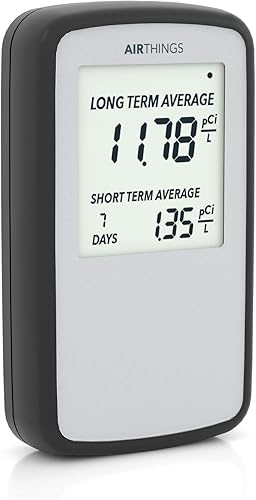
| Airthings Corentium Home 2 | app graphs and on-screen averages | Battery powered | Short- and long-term averages; GOOD, FAIR or POOR indicators | Bluetooth; remote monitoring with compatible Airthings Hub or View series monitor | 9.1 |
| Airthings Corentium Home 223 | simple battery-powered readings | 3 AAA batteries | Average daily, weekly and long-term concentrations | No app connectivity stated | 8.9 |
| Ecosense EB100 Radon Detector | a large plug-in display | Corded electric | Real-time, daily, weekly, monthly and long-term averages | No smartphone required | 8.3 |
| Ecosense EF100 Radon Detector | portable app history | Battery powered | Real-time levels, averages, historic highs and lows | Bluetooth app; Wi-Fi not required | 8.1 |
| Safety Siren Pro4 Radon Detector | audible and visual alarms | Corded electric | Digital, backlit | No app or Wi-Fi required | 7.8 |
| Radon Plus Radon Detector | long battery life and extra readings | 2 AA batteries; up to 7 years stated | Real-time, 24-hour, 7-day or 30-day averages | Standalone display; optional app | 7.6 |
| X-Sense Wi-Fi Radon Detector XR0A-iR | Wi-Fi notifications | 3 AA batteries; up to 2 years stated | Current levels and trend arrows | 2.4 GHz Wi-Fi and app | 7.4 |
| Radon One Radon Detector | a clear standalone screen | 2 AA batteries; up to 7 years stated | Always-on E-ink screen with color indicators | No app or registration needed for on-screen data | 7.0 |
| Kidde RAB Radon Detector | alerts in a dim basement | 3 AAA batteries | Backlit display and color-coded status bar | No app connectivity stated | 6.7 |
The best radon detectors for a basement
Airthings Corentium Home 2 leads this group for flexible placement and app graphs, while the other picks focus on straightforward displays, alerts or remote access. Choose by how you plan to check readings and whether the basement has a convenient outlet.
Airthings Corentium Home 2: Best for app graphs and on-screen averages
- Bluetooth app graphs
- Short- and long-term averages on display
- Battery powered
- Temperature and humidity sensors
Its battery-powered design lets you place it in a basement without looking for an outlet. Bluetooth app graphs and on-screen averages give you more than a single reading.
Pros
- No installation needed
- Portable placement
- Display includes short- and long-term averages
Cons
- Remote monitoring requires a compatible Airthings Hub or View series monitor
- Bluetooth app connection is needed for graphs
Airthings Corentium Home 2 fits a basement where you want both local readings and a phone view of the trend. Its battery-powered design means placement does not depend on an outlet, and the display shows short- and long-term radon averages.
Bluetooth connects it with the Airthings app, where graphs show how radon rises and falls. The detector also measures temperature and humidity, which can add context when you are checking changes in the basement environment.
The display uses GOOD, FAIR or POOR indicators for a quick glance. If you want remote monitoring and notifications while away, Airthings says pairing it with an Airthings Hub or View series monitor enables that feature.
Choose it if you want a portable detector with both screen and app information. Read our Airthings Corentium Home 2 review for a closer look at its display and monitoring features.
Airthings Corentium Home 223: Best for simple battery-powered readings
- Three AAA batteries
- Daily, weekly and long-term averages
- Portable between rooms
- Radon self-inspection report
This portable detector presents daily, weekly and long-term readings on its LCD screen. It suits buyers who want battery operation and straightforward readings without an app.
Pros
- No outlet needed
- Multiple averaging periods
- Can generate a radon self-inspection report
Cons
- No Bluetooth app features stated
- Does not include temperature or humidity readings
The Airthings Corentium Home 223 is a simpler battery-powered option for someone who mainly wants to read the detector itself. Its LCD displays average daily, weekly and long-term radon concentrations.
Three AAA batteries let you move it between rooms without needing an outlet. It can also generate a radon self-inspection report, which may be useful when keeping a record of readings.
This model does not have the Bluetooth app features described for the Corentium Home 2. Pick it if you want a straightforward portable monitor with several averaging periods, and compare it with our home radon monitor guide if you're still deciding what type of device fits your needs.
Ecosense EB100 Radon Detector: Best for a large plug-in display
- Plug-and-play setup
- First reading in 10 minutes
- Real-time through long-term averages
- Audible alarm
A full-size digital display shows several averaging periods, and setup is plug and play. Choose it where an outlet is convenient and you prefer a screen over phone-based checks.
Pros
- Full-size digital display
- Short- and long-term monitoring
- Audible alarm
Cons
- Requires an outlet
- Included power adapter is recommended for best performance
Ecosense EB100 suits a basement with an accessible outlet and a preference for a large digital display. It is plug and play, and its screen can show real-time, daily, weekly, monthly and long-term averages.
The EB100 also has an audible alarm and provides a first reading in 10 minutes. Ecosense recommends using the included power adapter for best performance.
Because it needs corded power, think about outlet access before choosing a spot. If you want a detector that can move around without a cable, consider the battery-powered EF100 instead.
Ecosense EF100 Radon Detector: Best for portable app history
- Battery powered
- Always-on display
- Bluetooth app charts
- Room-by-room comparisons
The portable, battery-powered design and always-on display work well in a basement without a nearby outlet. The Bluetooth app can store history and show room-by-room comparisons.
Pros
- Cord-free placement
- Always-on display
- App charts and saved history
Cons
- Detailed history requires a Bluetooth app connection
- No audible alarm stated
Ecosense EF100 is the portable choice for buyers who want an always-on screen and app history. Its battery-powered design can go in a basement without searching for an outlet, and the display shows real-time levels, averages and historic highs and lows.
Bluetooth connects the monitor to the Ecosense app, where you can store historical data, view charts and compare rooms. The device works offline as a standalone monitor, so Wi-Fi is not required for its on-screen readings.
Choose it if you want to move a detector between rooms and review trends in an app. For another view on monitoring a low level of the home, read can a radon detector work in a crawl space?.
Safety Siren Pro4 Radon Detector: Best for audible and visual alarms
- Plug-in operation
- Continuous short- and long-term monitoring
- Three audible alarm modes
- Visual alarm and backlit display
This plug-in monitor pairs a backlit display with audible and visual alarms. It fits a basement where you can leave it connected to power and want alerts without an app.
Pros
- Audible and visual alarms
- Three audible alarm modes
- Fail-safe self-test every 24 hours
Cons
- Requires an outlet
- No app or remote monitoring stated
Safety Siren Pro4 is a strong fit if you want audible and visual alerts without app setup. It plugs into an outlet, continuously tracks short- and long-term levels, and has a backlit display for checking readings in dim light.
You can choose among three audible alarm modes. The Pro4 also runs a fail-safe self-test once every 24 hours.
Its corded design makes outlet access part of the placement decision. Choose it for a fixed monitoring spot where you want alarms and a screen, without Wi-Fi or a subscription.
Radon Plus Radon Detector: Best for long battery life and extra readings
- Two AA batteries
- E-ink display
- Radon readings every 10 minutes
- Temperature, humidity and pressure readings
The standalone E-ink display shows selectable radon averages without requiring the app. Temperature, humidity and pressure readings add context to the basement environment.
Pros
- Portable battery-powered use
- Multiple averaging periods
- Measures temperature, humidity and pressure
Cons
- Bluetooth app is needed for detailed data management
- No alarm stated
Radon Plus offers a standalone E-ink screen with several averaging choices. It measures radon every 10 minutes and can display real-time, 24-hour, 7-day or 30-day averages.
The battery-powered monitor also measures temperature, relative humidity and atmospheric pressure. Its app is optional for basic use, but detailed data management, custom warning thresholds and export features use the app.
Choose it if extra environmental readings and a screen matter more than remote access. The stated battery life is up to 7 years with two AA batteries, depending on how it is used.
X-Sense Wi-Fi Radon Detector XR0A-iR: Best for Wi-Fi notifications
- 2.4 GHz Wi-Fi and app notifications
- Up to 999 days of continuous monitoring
- Trend arrows on LCD
- Temperature and humidity trends
App notifications and saved history suit buyers who want to check basement trends remotely. The LCD also shows current readings and trend arrows at the device.
Pros
- App notifications
- Export reports and data files
- Can start a new session in another room
Cons
- Requires 2.4 GHz Wi-Fi for app access
- Battery life is stated as up to 2 years
X-Sense XR0A-iR is the pick for checking changes from your phone. It connects to 2.4 GHz Wi-Fi, sends app notifications and can retain up to 999 days of monitoring history.
The LCD also shows current radon levels and trend arrows, so you can check the device directly. App tools include report and data exports, while temperature and humidity trends add context.
It takes three AA batteries, with battery life stated as up to 2 years. Choose it if Wi-Fi access and notifications matter more than a simple standalone display.
Radon One Radon Detector: Best for a clear standalone screen
- Always-on E-ink display
- Readings every 10 minutes
- Two AA batteries
- Color indicators
The always-on E-ink screen and battery operation suit a basement where you want to read the device directly. It displays radon in pCi/L or Bq/m³.
Pros
- No cables or setup required
- Color indicators support quick interpretation
- Can show real-time and longer-term data
Cons
- No temperature or humidity readings stated
- App is needed for history and data export
Radon One suits a basement where you want a clear screen without cables or required app setup. Its always-on E-ink display shows readings with color indicators, and it runs on two AA batteries.
The device provides readings every 10 minutes and supports pCi/L and Bq/m³ units. It can show real-time and longer-term data on the device, while history and data export are available through the app.
Choose it if you want to check readings at the detector and move it between rooms as needed. Its feature set stays focused on radon rather than adding temperature or humidity readings.
Kidde RAB Radon Detector: Best for alerts in a dim basement
- Battery powered with 3 AAA batteries
- Backlit display
- Audio and visual alerts
- Initial insights in as little as 12 hours
The backlit display, color-coded status bar and alerts suit a basement with little light and no convenient outlet. It tracks short- and long-term radon levels.
Pros
- No outlet needed
- Audio and visual alerts
- Initial insights in as little as 12 hours
Cons
- Battery life is stated as about 1 year
- No app or remote monitoring stated
Kidde RAB is a practical fit for a dim basement without a convenient outlet. It runs on three included AAA batteries and has a backlit display with a color-coded status bar.
Audio and visual alerts notify you when levels rise, and initial insights are available in as little as 12 hours. The detector tracks short- and long-term levels, so you can keep it in place and follow the pattern.
Its stated battery life is about 1 year. Choose it when battery operation and visible alerts matter more than app history or remote checking.
What should you compare before choosing a basement detector?
Compare power, display, averaging periods and alert style before choosing a basement radon detector. These details determine whether you can place it where you want and how easily you can check its readings.
Is a battery-powered radon detector better for a basement?
A battery-powered detector is useful when the best monitoring spot has no nearby outlet. Corentium Home 2, Corentium Home 223, EF100, Radon Plus, X-Sense XR0A-iR, Radon One and Kidde RAB use batteries.
A plug-in model like the EB100 or Safety Siren Pro4 can work well when an outlet is close and you want a fixed monitor. Keep cords and foot traffic in mind when choosing a basement location.
Do you need an app for basement radon readings?
An app helps if you want graphs, saved history or phone notifications, but it is not required for every detector. Corentium Home 2 and EF100 offer Bluetooth app features, while X-Sense adds Wi-Fi notifications.
Standalone screens suit buyers who prefer checking the unit directly. The Corentium Home 223, EB100, Safety Siren Pro4, Radon Plus and Radon One each present readings on the device.
Should a basement radon detector have an alarm?
An alarm can help draw attention to a reading, especially if the detector is in a basement you don't visit often. Safety Siren Pro4 provides audible and visual alarms, while the Kidde RAB and EB100 also include alarm features.
Alerts do not replace checking longer-term readings or following appropriate testing guidance. If results suggest a raised level, consult a qualified radon professional.
What is the difference between short-term and long-term averages?
Short-term averages help you see recent changes, while longer averages show a broader pattern. Radon can fluctuate, so use the averaging periods on your detector rather than making a decision from one reading.
The devices here show different periods, from real-time and daily readings to monthly or long-term averages. Check each model's display options to make sure they fit how you plan to monitor.
How should you use a basement radon detector?
Use the detector according to its instructions, leave it in a suitable location, and follow readings over time. For more context on changing patterns, see when radon levels tend to be highest.
Keep the device where you can check it without moving it frequently. If you want to compare rooms, use a model with room comparison features or follow its instructions for starting a fresh monitoring session.
A detector only measures conditions around its sensor. One basement reading does not describe every area of the home.
Which basement radon detector should you choose?
Choose the Airthings Corentium Home 2 if you want portable placement, on-screen averages and Bluetooth graphs. Pick the EB100 or Safety Siren Pro4 if an outlet is available and you prefer a fixed display or alarm.
Choose the EF100, Radon Plus or Radon One for portable screen-based monitoring, and the X-Sense XR0A-iR if Wi-Fi notifications and saved history matter most. To compare the broader category, see our best radon monitors for home.
Radon detectors help you track readings, but they do not remove radon from a home. If results are high, EPA guidance recommends contacting a qualified radon professional about next steps.
For general information, see the EPA's radon guidance.
Our top 3 picks at a glance
-
1
-
2
-
3
Frequently asked questions
Where should I place a radon detector in a basement?
Place a detector in the lowest lived-in level you want to monitor, following its instructions for location and setup. Avoid moving it during a monitoring period unless the device supports room comparisons or you are starting a fresh session.
A single detector only reports conditions near its sensor, so readings from one spot do not describe every room.
How long should a basement radon detector run?
Run a continuous monitor over time because radon can change from day to day and with weather or ventilation. Use the device's long-term average to understand the pattern, rather than treating a short reading as a lasting result.
Follow the device instructions for its initial reading and averaging periods.
Do battery-powered radon detectors work in a basement?
Yes. Battery-powered models can monitor a basement without a nearby outlet, and portable designs make it easier to compare locations.
Airthings Corentium Home 2, Airthings Corentium Home 223, Ecosense EF100, Radon Plus, X-Sense XR0A-iR, Radon One and Kidde RAB are battery powered.
Check battery replacement needs and the display or app features that matter to you.
Can a radon detector replace a professional test?
A home detector helps you follow readings over time, but it may not meet every need for a real estate transaction or formal assessment. If results are high, EPA guidance recommends contacting a qualified radon professional about testing and next steps.
Use the detector's instructions and local guidance when deciding whether another test is needed.
What should I do if basement radon readings are high?
Use the monitor's longer-term average and follow its instructions to confirm the result. EPA guidance says to fix a home when the radon level is 4 pCi/L or more, and to consider fixing between 2 and 4 pCi/L.
Contact a qualified radon professional for evaluation and mitigation advice.


